Ghanaian Canned Sardine Stew Recipe
Ghanaian Canned Sardine Stew
Did you know one of Ghana’s quickest everyday meals starts with a tin of sardines? The oil from the can flavors a base of onions, tomatoes and garlic, scotch bonnet brings the heat, and the sardines are folded in gently for the last few minutes so they stay whole. It is eaten with rice, bread, banku or kenkey.
What is Ghanaian sardine stew?
I. Historical Provenance: The Global Commodity Meets the Local Palate
The story begins not with fresh fish, but with the canning factory. Canned sardines (often brisling or pilchards) arrived in West Africa via colonial trade networks—a durable, non-perishable protein source for expatriates, the military, and urban workers. The key transformation is the complete appropriation and re-invention of this imported product.
- From Preserve to Ingredient: In its European context, canned sardines are often eaten directly on toast or crackers, a self-contained product. In Ghana, the tin is deconstructed. The fish are removed, often kept whole, and the oil or tomato sauce from the can becomes the cooking fat and flavor base. This is a critical act of resourcefulness—no part of the purchased commodity is wasted.
- Bridging the Protein Gap: With fluctuations in the availability and cost of fresh fish or meat, the affordable, shelf-stable tin became a cornerstone of urban and working-class diets. It provided reliable animal protein, circumventing issues of refrigeration and spoilage in tropical climates.
- Loss of Origin, Gain of Utility: The specific species or origin of the sardines (Morocco, Portugal, Norway) becomes irrelevant. They are homogenized into the category "canned sardines," a functional ingredient defined by its form (tin) and texture (soft, bony) rather than its terroir.
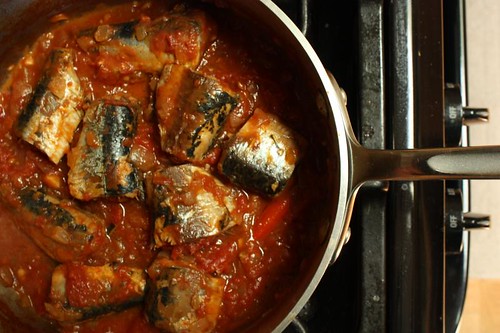
Fig. 1: The Reinvented Commodity. The stew embodies the transformation. The sardines, once packed in a sterile tin, are now fully integrated into a vibrant, complex sauce. The dish bears no resemblance to a European preparation; it is visually and gustatorily West African. The "peri-peri" in the original image title itself signals adaptation, using a Portuguese-African chilli lexicon. (Source: Flickr, 2011)
How is Ghanaian sardine stew built?
The recipe follows a classic West African stew template, into which the sardines are slotted as a module.
| Element | Role in the stew |
|---|---|
| Base | Onions, tomatoes and garlic, cooked in oil from the sardine can |
| Heat | Scotch bonnet, non-negotiable |
| Sardines | Folded in gently for the last few minutes so they stay whole |
| Optional spices | Curry powder and thyme |
| Served with | Rice, bread, banku or kenkey |
| When | Breakfast or lunch staple |
- The Base (Sofrito/Stew Base): Onions, tomatoes, garlic. This is the universal starter for countless Ghanaian sauces (stews). The use of oil from the sardine can infuses this base with a distinct, fishy umami from the very beginning.
- The Heat Axis (Scotch Bonnet): The addition of whole or chopped scotch bonnet peppers is non-negotiable. It defines the dish's character, transforming a mild fish into a potent experience. The pepper's fruity, searing heat asserts a local identity over the global commodity.
- The Integration (Gentle Fold): The instruction to add sardines "gently last 5 mins" is technically crucial (to prevent disintegration) but also symbolic. The fish are not the starting point; they are the final addition to a sauce that already stands on its own. The sauce is the star; the sardines are the convenient, fortifying add-in.
- The Optional Spices (Curry/Thyme): These reflect the layered colonial and trade histories—curry powder from British-Indian influence, thyme from broader European herb use. Their optional status shows the recipe's flexible core.
When do Ghanaians eat sardine stew?
This stew exists in a specific niche of the food ecosystem.
- Meal Spectrum: It is "breakfast/lunch staple." It is quick enough for a morning meal before work or school, substantial enough for a midday meal. Its pairing with staples like rice (universal), bread (urban, affordable), or banku (fermented corn/cassava dough, deeply Ghanaian) shows its versatility across class and preference.
- A Dish of Resilience: It is a testament to making-do, to creating flavor and nourishment from the most accessible, non-perishable ingredients. It is a dish of single parents, students, busy professionals, and times of financial constraint. Its prevalence speaks to economic reality as much as taste preference.
- Transnational Comfort Food: For the Ghanaian diaspora, a tin of sardines, an onion, and a pepper are among the easiest ingredients to source anywhere in the world to recreate a taste of home. The dish travels seamlessly because its core component is globally traded.
IV. The Contradiction and the Narrative
There is an inherent tension in the dish: it is both deeply local in its flavor profile (scotch bonnet, stew base) and profoundly globalized in its central protein. This is not a contradiction to resolve, but the very essence of its story. It represents a post-colonial culinary reality: the adoption of foreign products not as a sign of cultural dilution, but as an act of powerful, creative appropriation.
The Ghanaian kitchen did not simply accept canned sardines; it conquered them, subsuming them entirely into its own logic and flavor world.
Frequently asked questions
Why add the sardines last?
They are already cooked, so a gentle fold in the last few minutes heats them through without breaking them apart.
What do you eat sardine stew with in Ghana?
Rice, bread, banku or kenkey, often at breakfast or lunch.


